$57 a month was what Denis Pushkarev raised when he asked for donations to keep core-js going.
Source: The people holding up the internet | Data Drop
h/t D’Arcy Norman
Source: Sovereign by habit, slides
Large language models sometimes behave in ways resembling human emotional responses, and recent work has identified internal representations that may explain this. We ask whether LLMs represent pain distinctly from fear, sadness, and generic negative valence, and whether this representation functions as pain would be expected to. We build a dataset describing painful situations across five categories: physical, psychological, social, moral, and cognitive.
Source: The Pain Axis: LLMs Represent Self-Directed Harm and Act to Relieve It
The research project IDOVIR strives for making results in the field of digital architectural reconstruction available in a comprehensible, permanent, and open-access form and to facilitate scientific discussion of the research results.
Source: Home – IDOVIR
This document outlines the intended behavior and values of MAI models, the models developed by Microsoft AI. It summarizes our approach to training and operating them, following a set of design principles we call Humanist AI. This document, and our approach more generally, is still under development so we are not using it to train our models today. Instead, we’re sharing it broadly for public consultation. We’ll take feedback, iterate on it, and publish a revised version toward the end of the year, which we’ll use to guide our model development in 2027 and beyond.
Source: Humanist AI Code of Conduct | Microsoft AI
h/t D’Arcy Norman
LrLexicon is a free, open-source Lightroom Classic plugin that automatically generates photo keywords using AI. Select photos, run one command, and get AI-suggested keywords covering subject, setting, mood, and photographic technique — reviewed and editable before anything is written to your catalog.
Here we introduce a genomic pretrained network with species tree and alignment representations (GPN-Star), which is a biologically grounded genomic language model featuring a phylogeny-aware architecture that leverages whole-genome alignments and species trees to model evolutionary relationships explicitly.
Source: Predicting genome-wide functional constraints with GPN-Star | Nature
You can just prove things, apparently.
Source: How I Vibed a Proof of Conway’s Conjecture — overreacted
Advancements in Image Processing: The integration of AI, machine learning (ML), and deep learning (DL) has revolutionized image processing and analysis, enabling high-resolution, non-destructive imaging for failure analysis (FA) in electronics and semiconductors. AI-Powered Image Segmentation: AI-driven segmentation techniques improve the precision and scalability of defect detection, addressing challenges posed by complex and high-dimensional image datasets. Future of FA with AI and Data Management: The adoption of cloud-based training, multimodal pipelines, and robust data management systems is paving the way for automated, efficient, and predictive failure analysis workflows.
Source: Artificial Intelligence in Multimodal Microscopy Workflows for Failure Analysis | ZEISS
Extracted system prompts from Anthropic – Claude Fable 5.1, Opus 5, Claude Design, Claude Code. OpenAI – ChatGPT GPT-6-Astra, Codex. Google – Gemini 3.8 Flash, 3.1 Pro, Antigravity. xAI – Grok, Grok Bot, Cursor, Kimi and more! Updated regularly.
Mathematician Tristan Buckmaster of New York University and Levent Alpöge, a researcher affiliated with Anthropic, one of OpenAI’s major competitors, had made significant progress solving the problem over the past month using AI tools adapted from OpenAI and Anthropic. But before they could publicize their findings, OpenAI mounted its own colossal effort—pouring millions of dollars of computational resources into the problem. OpenAI says it didn’t knowingly tap into Buckmaster and Alpöge’s latest work, but Buckmaster has released public statements questioning that position.
Source: How an AI math breakthrough ignited a controversy | Science | AAAS
Their goal is a scientific superintelligence wired directly into the wet lab. They are all in on the bitter lesson, and the thesis follows from it: a lab is an infinite token generator. Produce data at scale, and the synergies give you a general reasoner that can tackle any scientific problem. They are committing hard. Biology, chemistry, drug discovery, and materials science, all at the same time. Time will tell if it works, but it is an exciting hypothesis.
Source: Gallery of Concept Visualization
We cannot engage in a fight or expose ourselves to manipulations that threaten the lives of these people and their loved ones, leaving them at the mercy of autocrats, fascists and agencies that take extra-legal courses of action. The possibility that our work may cause legal and financial consequences to those who are close to us – or even only have something to do with us – leaves us no choice. A/I is shutting down. The Autistici/Inventati collective is shutting down and will soon discontinue all of the services we provide.
We ran Opus 4.8 and Mythos Preview in multi-target mode with 48 hours of wall time and up to 12,500 NVIDIA H100 hours of compute for running specialized protein design and folding models. We also ran Mythos Preview in single-target mode with 24 hours of wall time and up to 2,500 NVIDIA H100 hours of compute for each target.5
Source: How Claude is accelerating protein design and analytical chemistry Anthropic
If you’re a website owner, you can help your audience find your publication as a preferred source in Google Search. When a user selects your site as a preferred source, your content is more likely to appear in “Top Stories”, highlighted with a “preferred” badge. In AI Mode and AI Overviews, your content can be highlighted with a “preferred” badge for users who have selected your site as a preferred source.
Drive EViews 13 from Python — or let an AI assistant drive it for you. A Model Context Protocol server and a Python library, sharing one engine. Every number comes from EViews itself.
Source: eviews-mcp — Drive EViews from Python and AI assistants
Neural networks are increasingly deployed in scientific, safety critical, and mission critical pipelines, yet verification and analysis are often performed outside the programming environment that defines and runs the model. This creates a semantic gap between the executed network and the analyzed artifact: guarantees can depend on implicit conventions about operator semantics, tensor layouts, preprocessing, floating-point behavior, graph transformations, accelerated kernels, and external certificates. We present TorchLean, a unified framework for formalizing, executing, and verifying neural networks in Lean 4.
Source: [2602.22631] TorchLean: Formalizing Neural Networks in Lean
Welcome to TorchPhysics, an open-source PyTorch library that implements deep learning methods for partial differential equations, enabling engineers and applied mathematicians to use modern AI-based methods in their usual workflow.
Clone voices, generate speech across seven TTS engines, dictate into any app, and talk to agents in voices you own. A free and local alternative to ElevenLabs and WisprFlow, running entirely on your machine.
A Python-based GUI application for transcribing and processing images containing historical handwritten text using Large Language Models (LLMs) via API services (OpenAI, Google, and Anthropic APIs). Designed for academic and research purposes.
Tesserae is an intertextual analysis tool for discovering textual parallels in classical literature. It helps scholars find passages where one author may have been influenced by, alluding to, or directly quoting another text. Founded in 2008 by Neil Coffee (Department of Classics) and J. P. Koenig (Department of Linguistics) at the University at Buffalo, SUNY, this is Version 6, a modern reimplementation of the V3 algorithm.
Source: Tesserae V6
Work on texts and images. Identify and mark named entities. Use your data in other tools or connect to other data on the Web. Without the need to learn code.
Source: Welcome to Recogito
More words were associated with better quiz performance in both the original study and the replication. Verbatim overlap was associated with worse performance, although that relationship was less robust in the replication. This makes the simple story awkward in a useful way: recording more can help, copying without processing can hurt, and a keyboard makes both easier.
The scale and level of mathematical sophistication differ enormously from my own weekend project, but the underlying workflow is remarkably similar: generate many candidate approaches, eliminate most of them through exact computation and criticism, formalise what can be formalised, and reserve human judgement for novelty, correctness and significance. The important observation is not that either system solved a famous open problem. It is that mathematical experimentation itself is becoming dramatically cheaper, while proof, understanding, novelty and independent review remain scarce.
Source: Mathematical Experiments Are Becoming Abundant Through Human-Machine Teaming | Towards Data Science
There are limitations to the effectiveness of watermarking. Using our key, one can only answer the question “What is the likelihood this was partly written by Claude?” It doesn’t confirm whether the text was human-written, and it can’t tell whether the text was written by a different AI (even if that other AI uses watermarking, it would have a different key; it might also use a different watermarking method altogether). Detecting a watermark also doesn’t work well on small samples, where there are fewer word choices and thus less information to go on. As a passage increases in length, confidence about Claude’s involvement increases too.
I dumped into Claude my huge document containing all I knew about my adoption. I added stories and notes I had about family members on both maternal and paternal sides. And then I said: OK, you have access to my Ancestry account (via the Chrome plugin), I want you to find out as much as you can about these people, their ancestors, using my DNA results and connections therein, and continue to iterate until we’ve exhausted all data trails.
“An operator can drag blocks together in their Blockly editor, to define each fraud routine, given a task type,” reads Bitsight’s report. “Once the routine is saved, it gets exported as JavaScript and uploaded to the S3 buckets. An operator doesn’t need as much understanding of the underlying technicalities, as it is all set in place for ease of use.”
Source: Read This Before You Buy That TV Streaming Stick – Krebs on Security
Vexflow is a JavaScript library for rendering standard music notation and guitar tablature.
Source: VexFlow – HTML5 Music Engraving
Like other chatbots, Claude lets people share their conversations with others by creating a publicly accessible link of the chat. People may do this to send the full text of a conversation to their friends or coworkers in a group chat, for example. But they may not realize Google is also surfacing these links in search results, making them available to essentially anyone.
Source: Tons of Peoples’ Claude Chats and Creations are Exposed on Google
Untangling the sprawling web of Trump family crypto ventures, and the fortune they’re making by cashing in on the presidency.
Source: Mapping Trump’s Crypto Empire
In that video, he said he’s starting a “bail fund” in case he’s arrested and goes to jail. Collectively, these posts and videos have hundreds of thousands of likes and millions of views. But the cease-and-desist is not real; it is a wholesale fabrication created by the influencer for attention, likes, and clout. He is at zero risk of persecution or arrest for speaking out about Flock (though he may be at risk for forging a fake cease-and-desist letter.) In the meantime, Orion has gotten more than 30,000 new followers in the last month according to the Instagram tracking website NotJustAnalytics, a period in which he has posted essentially only about Flock and, primarily, about his stickers and his cease-and-desist letter.
Source: The Rise of Anti-Flock Influencers Who Make Things Up for Clout
One of the most important things I learned at Mozilla was the idea of an explicit “priority of constituencies”; that is, if you have responsibilities to different groups for different reasons, being clear and honest up front about who is at the front of the line and why. As with The Tyranny Of Structurelessness, there’s always a hierarchy, and letting those hierarchies stay hidden means letting power escape scrutiny.
Source: mhoye: “One of the most important thin…” – ds106 Social
Here’s how it works: On the Meta AI app, a user can tag a public Instagram account and direct the chatbot to create new A.I. photos based on photos from that person’s account.
Source: How to Prevent Meta From Using Your Instagram Images in A.I. – The New York Times
Glitchlet is a lightweight, browser-based creative-coding environment (HTML/CSS/JS only). Think “Glitch-lite” for shared hosting: students edit multi-file projects in the browser with instant preview, save locally via IndexedDB, and later publish to a class projects folder.
Source: samplereality/glitchlet: A Glitch-lite/Glitch-like creative coding workbench
h/t Brian B.
A desktop app that helps you make best use of git and GitHub for AI-assisted software development.
Source: judell/bram
When an interface relies solely on conversation, it imposes a dual burden: a linguistic challenge for input and a cognitive challenge for output. We’ll examine both separately below.
Source: Matching AI Modality To User Intent: Designing The Right Interface — Smashing Magazine
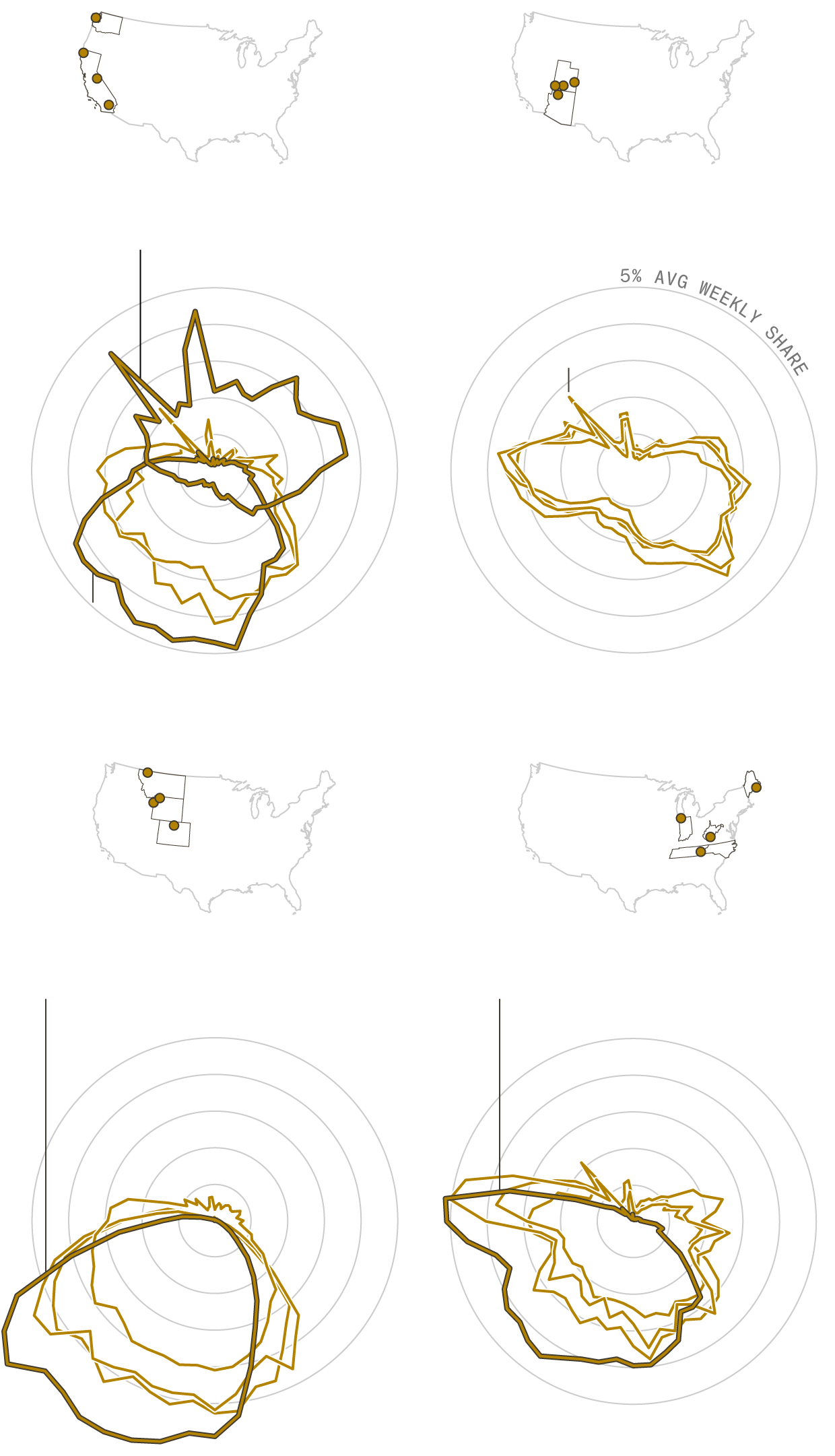
America’s national parks are surging in popularity between America250 celebrations and the increasing demand for domestic travel. Our guide on 16 popular national parks from across the US is here to help you find ways around the crowds.
Source: Yellowstone, Grand Canyon, Zion: When to Visit US National Parks
Meet Callback 8020: the perfect blend of functionality and privacy in a Flip-Phone, no social media or browser allowed.
“We acknowledge the approach taken in this particular exercise was not appropriate, and we sincerely apologize to employees, physicians, and union representatives,” said Ron Johnson, interim CEO at NL Health Services.
Source: Canadian health board sorry after ‘tasteless’ phishing test
HYPERBLAM lets you make music with HTML. It’s a declarative implementation of the Web Audio API and is completely dependency free. Create pedal boards, drum machines, sampled instruments. And don’t write a single line of JavaScript in the process. Unless you really want to.
Source: Hyperblam Docs Home : HYPERBLAM
The arrival of the keyboard made people dream of more, including the vaunted notion of transcribing someone talking in real time. In search for that dream, multiple people chipped away at “touch typing” – nine fingers on the keyboard, eyes off of it. The effort took decades to develop, many saw it as a fad, and no one fully agreed on what “proper” meant for some years more.
Source: Show your hands honor for the strange power they bring you – Aresluna
You want as much data as you can get about your health as quickly and as cheaply as possible. In other words, you want a technology optimized for getting as many “megabytes per second per dollar” of information about your body. In an ideal and near-term future, we take this information and watch how it changes over time. We compare it to the general population, we talk to doctors, nutritionists, coaches, trainers, and AI friends. We become more aware of our health and we improve our lifestyles. We make smarter, more proactive, more frequent decisions. And we live longer, healthier lives, better lives. That’s the dream – now let’s step back to our machine:
Source: A New Era of Midjourney
elcome to the world’s largest library of AI-translated ancient sources.
Source: Source Library — Ancient Texts Translated to English

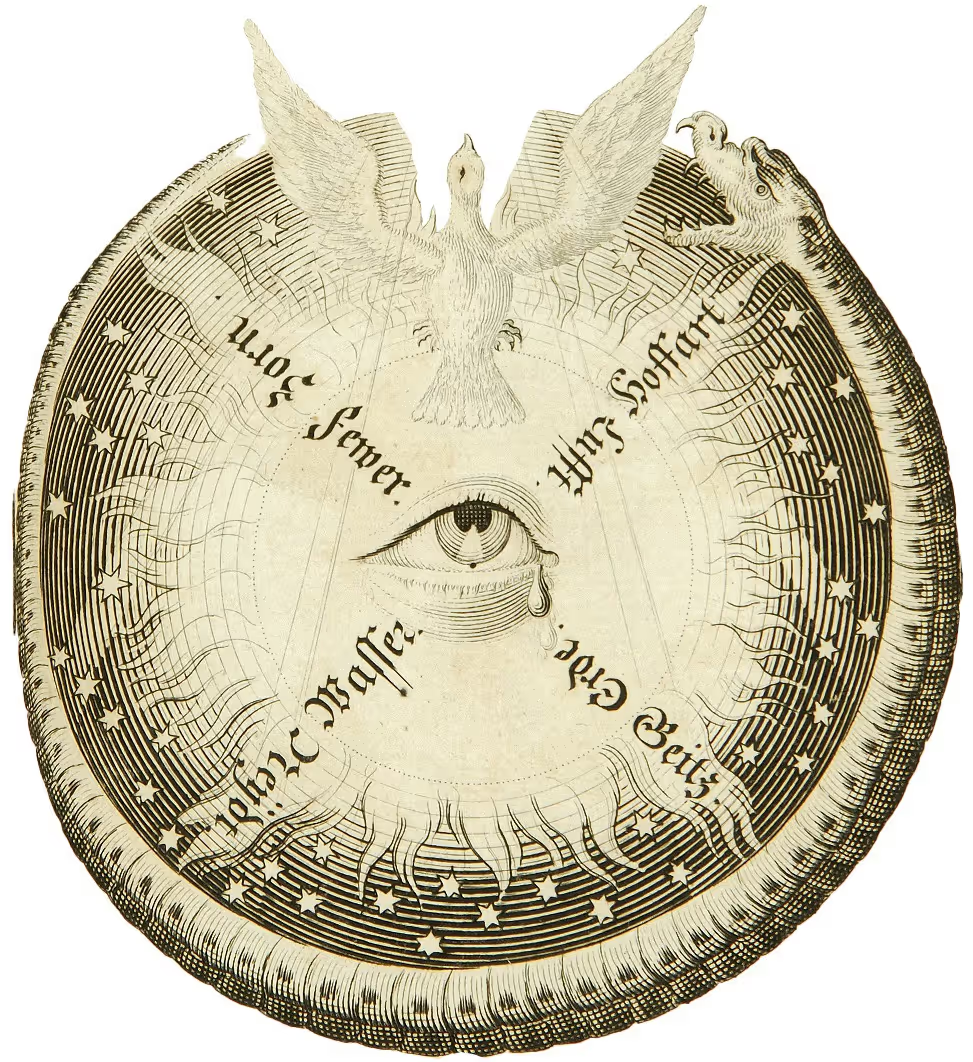
At the heart of the Embassy of the Free Mind lies the Bibliotheca Philosophica Hermetica (BPH) collection: over 28,000 volumes, including 5,000 manuscripts dating from the 15th to the 19th century, devoted to the traditions that have shaped the wisdom currents of the West. Alchemy, Kabbalah, Mysticism, Rosicrucianism, Astrology, Hermetic philosophy, and more. The library takes its name from Hermes Trismegistus, the legendary Egyptian sage whose teachings reveal a thread running through all these traditions: that everything is connected, and that something divine lives at the core of every human being.
Source: The BPH Collection | Embassy of the Free Mind
Source Library is the world’s largest freely available collection of translated historical primary sources from the Renaissance. At launch, it holds more than 15,000 books across 55 languages, including 6,000 first-ever English translations and roughly seven billion words of original text and translation, comparable in scale to the entire English Wikipedia. Works previously readable only by Latin scholars or locked behind expensive academic editions are now open to anyone.
Source: Most of the Renaissance Has Never Been Read. Source Library Is Opening It. – Internet Archive Europe
The session is designed especially for researchers, educators, and open education practitioners who may not see themselves as technical users of GitHub. Importantly, this is not a coding workshop and no prior GitHub expertise is required. Instead, it offers a guided and accessible way of learning how to “read” a repository critically and ask better questions about what responsible openness looks like in practice. Together, we will examine a selected repository and reflect on a set of practical and critical questions. How clearly does the repository explain its purpose? Does it support reuse through documentation and licensing? Does it make change visible over time? Are there clear pathways for participation? What barriers might non-technical educators face? And what does long-term openness require in terms of care, maintenance, and governance?
Source: GitHub as Sociotechnical Infrastructure for Responsible Openness in Open Education : #ALTC Blog
h/t Maren D.