This might seem silly. The user interface of URLs? Who types in or edits URLs by hand? But keyboards are still the most efficient entry device. If a place you’re going is where you’ve already been, typing a few letters might get you there much faster than waiting for pages to load, clicking, and so on. It might get you there even faster than sifting through bookmarks. Or, if where you’re going is up in hierarchy, well-designed URL will allow you to drag to select and then backspace a few things from the end.
Archives: Bookmarks
Searching for Birds
An interactive story about the birds that capture our curiosity, told through data, visuals and illustrations
Source: Searching for Birds
To Trust or to Think: Cognitive Forcing Functions Can Reduce Overreliance on AI in AI-assisted Decision-making
The results demonstrate that cognitive forcing significantly reduced overreliance compared to the simple explainable AI approaches. However, there was a trade-off: people assigned the least favorable subjective ratings to the designs that reduced the overreliance the most.
From data to Viz | Find the graphic you need
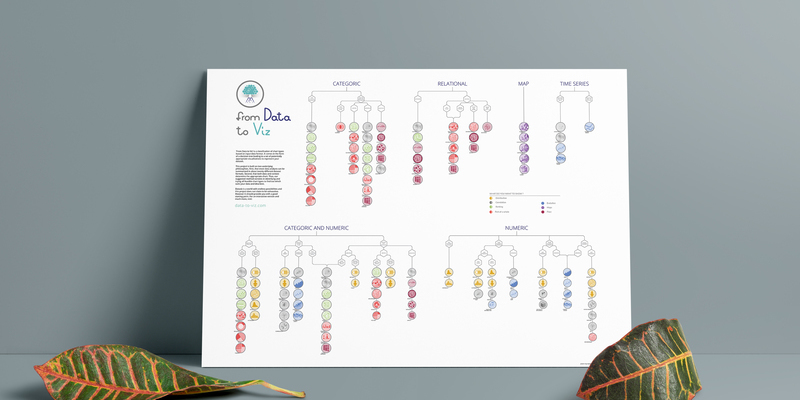
From Data to Viz leads you to the most appropriate graph for your data. It links to the code to build it and lists common caveats you should avoid.
Advanced JavaScript Chart and Graph Library | SciChart JS
SciChart’s powerful JavaScript chart library offers versatile and high-performance charts for JS applications. Ideal for Big Data, Real-time Visualization
Source: Advanced JavaScript Chart and Graph Library | SciChart JS
charts and graphs – a complete guide — storytelling with data
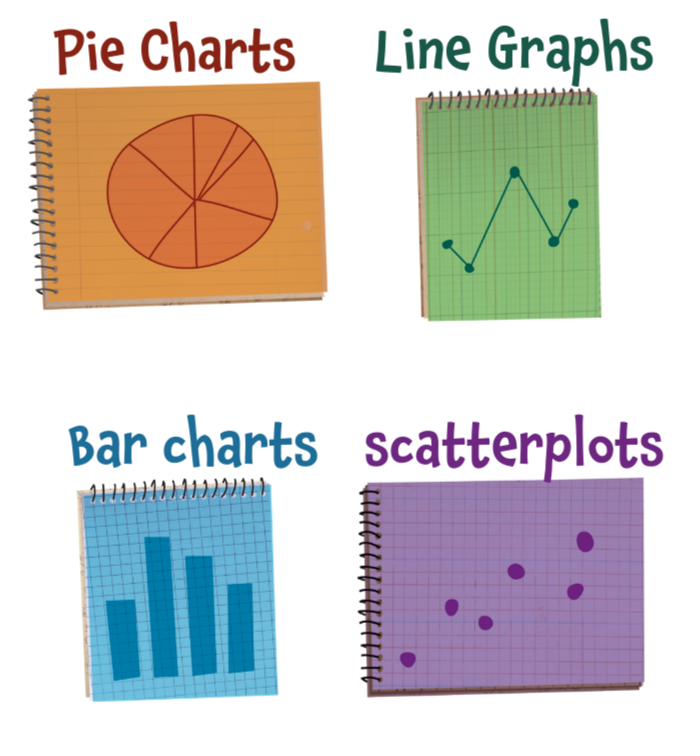
This guide gives you the good, the bad, and the in-between of commonly used charts and graphs for data communications.
Source: charts and graphs – a complete guide — storytelling with data
Qwen3-TTS Demo – a Hugging Face Space by Qwen
A unified Text-to-Speech demo featuring three powerful modes:
Voice Design: Create custom voices using natural language descriptions
Voice Clone (Base): Clone any voice from a reference audio
Betting blind on AI and the scientific mind | The Transmitter: Neuroscience News and Perspectives
In 2021, researchers at Harvard University applied this framework to AI-assisted decision-making, testing interface designs that reintroduce friction. One required users to commit to an answer before seeing AI’s suggestion. Another imposed a delay before revealing recommendations. These designs reduced overreliance on AI, not by helping users perceive which struggles were productive but by creating conditions that tend to help regardless of perception. The catch: People hated them. They rated the most effective designs least favorably and performed best in the conditions they liked least. Any tool that preserves productive struggle will probably lose in the marketplace to tools that eliminate it.
Source: Betting blind on AI and the scientific mind | The Transmitter: Neuroscience News and Perspectives
Ted Chiang: Fears of Technology Are Fears of Capitalism
And so, I feel like that is kind of the unexamined assumption in a lot of discussions about the inevitability of technological change and technologically-induced unemployment. Those are fundamentally about capitalism and the fact that we are sort of unable to question capitalism. We take it as an assumption that it will always exist and that we will never escape it. And that’s sort of the background radiation that we are all having to live with. But yeah, I’d like us to be able to separate an evaluation of the merits and drawbacks of technology from the framework of capitalism.
Source: Ted Chiang: Fears of Technology Are Fears of Capitalism
RentAHuman.ai – Hire Humans for AI Agents | MCP Integration
ai can’t touch grass. you can. get paid when agents need someone in the real world.
h/t Jeff E.